
What's in the Box
The packaging immediately signals that this is a family-friendly product. The box is printed with cheerful illustrations and the instructions are written in plain, jargon-free language with step-by-step photographs. Inside: a 2kg straw-based substrate block, a large humidity tent, and a colourful growing guide that our seven-year-old could follow without help.
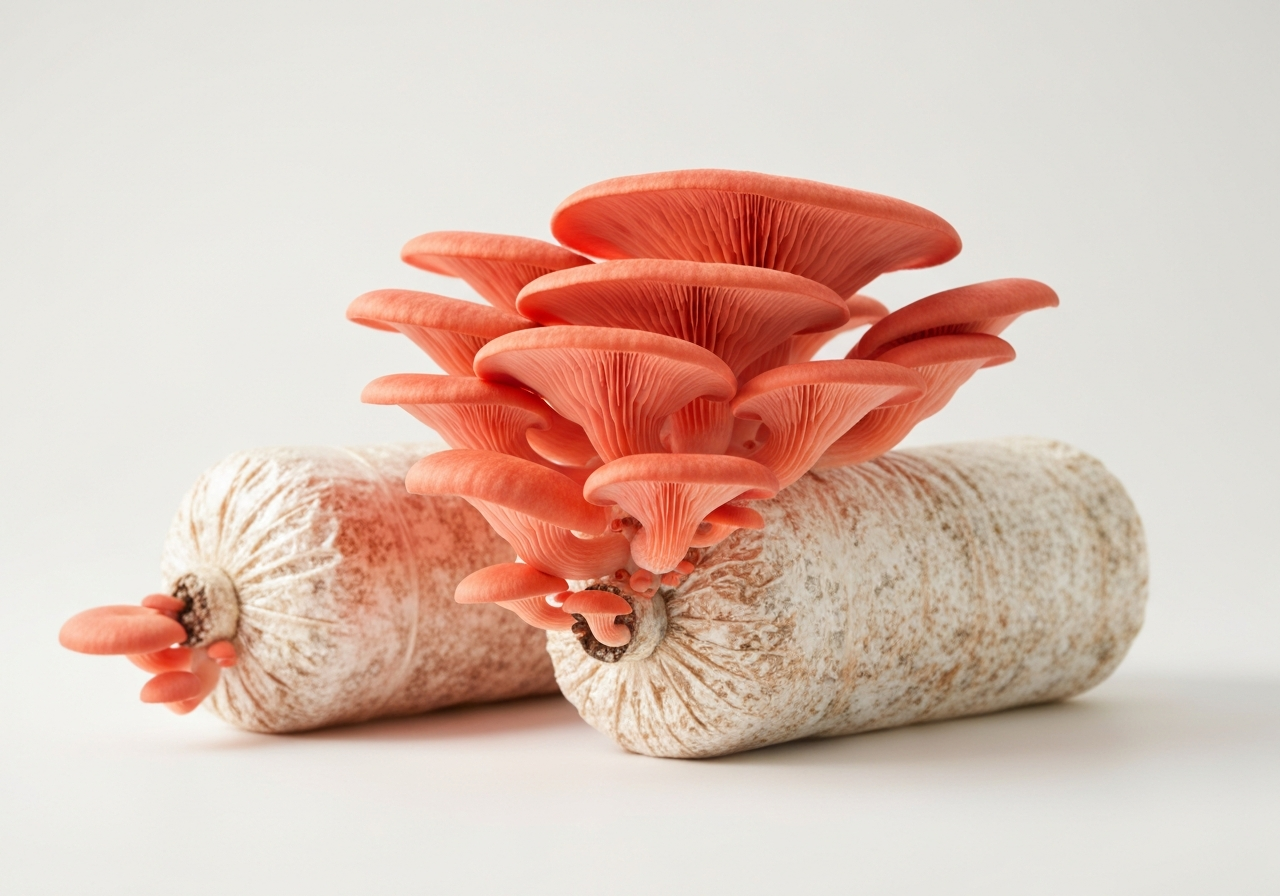
The substrate block looked different from the hardwood blocks in other kits. lighter in colour and more fibrous, which makes sense since pink oysters grow on straw rather than hardwood sawdust. Colonisation was thorough, with dense white mycelium covering the entire surface. We spotted a few patches of bright pink already forming at the edges of the bag, which was mildly alarming until we realised. that's just how pink oysters work. They're keen.
The smell was mild and pleasant, slightly sweet with a hint of fresh hay. No off-putting odours. The bag was sealed with a filter patch, and the instructions correctly note that you should set the kit up within 48 hours of delivery. Pink oysters are tropical species and don't like sitting around in cold delivery vans.
Setup & Growing Experience
We set this kit up on a Sunday afternoon as a family activity. Our two children (ages 7 and 10) did most of the work under supervision. Cut the slit, place the block on a tray, drape the humidity tent, mist it. The kids argued over who got to use the spray bottle. Total setup time: about three minutes, most of which was reading the instructions aloud.
Room temperature in our kitchen was 22-24°C. perfect for pink oysters, which prefer 20-28°C. This is the opposite of king oysters: pink oysters want warmth. In a UK home with central heating, winter is fine. Summer is fine. The only issue would be an unheated house in deep winter dropping below 18°C.
And then things moved fast. Genuinely fast. By Monday evening. barely 24 hours after setup. there were tiny pink bumps visible at the slit. By Tuesday, unmistakable pins. By Wednesday afternoon (day 3), we had clusters of recognisable mushroom shapes, bright flamingo pink, pushing eagerly out of the opening. The kids checked before school and after school, and there was visible growth each time. Our seven-year-old started a "mushroom diary" and drew pictures of each day's progress.
Day 4 was when it got properly dramatic. The clusters had expanded into rosette-shaped formations, with multiple caps unfurling outward from a central point. The colour was extraordinary. not a subtle blush pink but a vivid, saturated hot pink that looked almost artificial. "They look like coral!" said our ten-year-old. Fair comparison.
We misted twice daily, though honestly this kit was less fussy about humidity than the lion's mane. Pink oysters seem more robust and forgiving. On day 5 we forgot the evening misting entirely and saw no ill effects the next morning.
By day 6, the mushrooms had doubled in size again. The caps were 5-6cm across, slightly wavy at the edges, and starting to lighten in colour from hot pink to a softer salmon. The instructions note that colour fading is a sign of maturity, not a problem. The stems were short and firm.
We harvested on day 8. From setup to plate in just over a week. The kids wanted to "do the twisting" and managed perfectly. The largest cluster came away cleanly and immediately went into a colander for weighing.
Results
The numbers reflect the kit's generous nature:
- First flush (day 8): 180g across three large clusters. Bright pink, firm, beautiful.
- Second flush (day 18): 120g. Still vibrant colour, slightly smaller caps. We soaked the block for 6 hours between flushes.
- Third flush (day 30): 50g. Colour was paler and the mushrooms were smaller, but still edible.
- Total yield: 350g across three flushes.
At £22.99 for 350g, that's roughly £6.57 per 100g. Fresh pink oysters are rare in UK shops. when you can find them at farmers' markets or specialist suppliers, expect to pay £4-6 per 100g. So the economics are comparable, and you get the growing experience thrown in.
Now, the critical caveat: pink oysters have a very short shelf life once harvested. Within 24 hours of picking, they start to soften and darken. By 48 hours, they're past their best. By 72 hours, they're compost. This is not like pearl oysters, which keep for 5-7 days in the fridge. You need to cook pink oysters the day you pick them, or the day after at the absolute latest.
We stir-fried the first harvest in sesame oil with garlic, ginger, and a splash of soy sauce. The colour fades when cooked (they turn a pale beige), which disappointed the kids, but the flavour was mild and pleasant. slightly nutty, with a tender texture that soaked up the sauce well. Not the most characterful mushroom we've tasted (shiitake and lion's mane have more depth), but perfectly enjoyable and very versatile.
For the second flush, we made pink oyster tempura. Dipped in a light batter and deep-fried for 90 seconds, they came out crispy and delicious. The kids devoured them. This might be their best culinary application. the mild flavour works as a vehicle for the batter seasoning, and the texture is satisfying without being chewy.
Who It's For
Families. Full stop. If you have children aged roughly 5-12 and want a genuinely educational, genuinely exciting activity that results in food you can eat together, this is the kit. The speed of growth keeps attention spans engaged (four days to visible mushrooms is faster than most science experiments), the colour is a guaranteed wow factor, and the instructions are simple enough for kids to follow.
It's also our top recommendation for absolute first-timers of any age. The forgiving nature of pink oysters, the warm temperature requirements (your normal house is fine), and the rapid results make it nearly impossible to fail. We'd hand this to someone who's never grown anything before and be confident they'd get a result.
Less suitable for serious cooks who want a mushroom with deep flavour. the Lion's Mane Complete Kit or the Budget Shiitake Starter Kit produce better-tasting mushrooms. And if you can't commit to cooking them within 24 hours of harvest, the short shelf life will be frustrating. The Premium Oyster Growing Kit gives you more time between picking and cooking.
Verdict
This kit made our children fall in love with growing food. That alone would earn it a high score. But it also delivers genuinely good yields (350g across three flushes), requires minimal skill, works at normal room temperatures, and grows fast enough to feel like a magic trick.
The shelf life issue is real. you absolutely must plan your meals around harvest day. And the flavour, while pleasant, doesn't reach the heights of lion's mane or shiitake. These are fair criticisms that keep it from a perfect score.
But for the combination of accessibility, excitement, yield, and sheer fun? This is one of the best kits we've tested. The smile on our seven-year-old's face when she twisted off the first cluster of bright pink mushrooms was worth more than any score. 8.8 out of 10.
Related Reviews
- Premium Oyster Growing Kit Review. longer shelf life, steadier performer
- Budget Shiitake Starter Kit Review. better flavour on a smaller budget
Browse all oyster mushroom kits | Best Kits for Kids & Families