
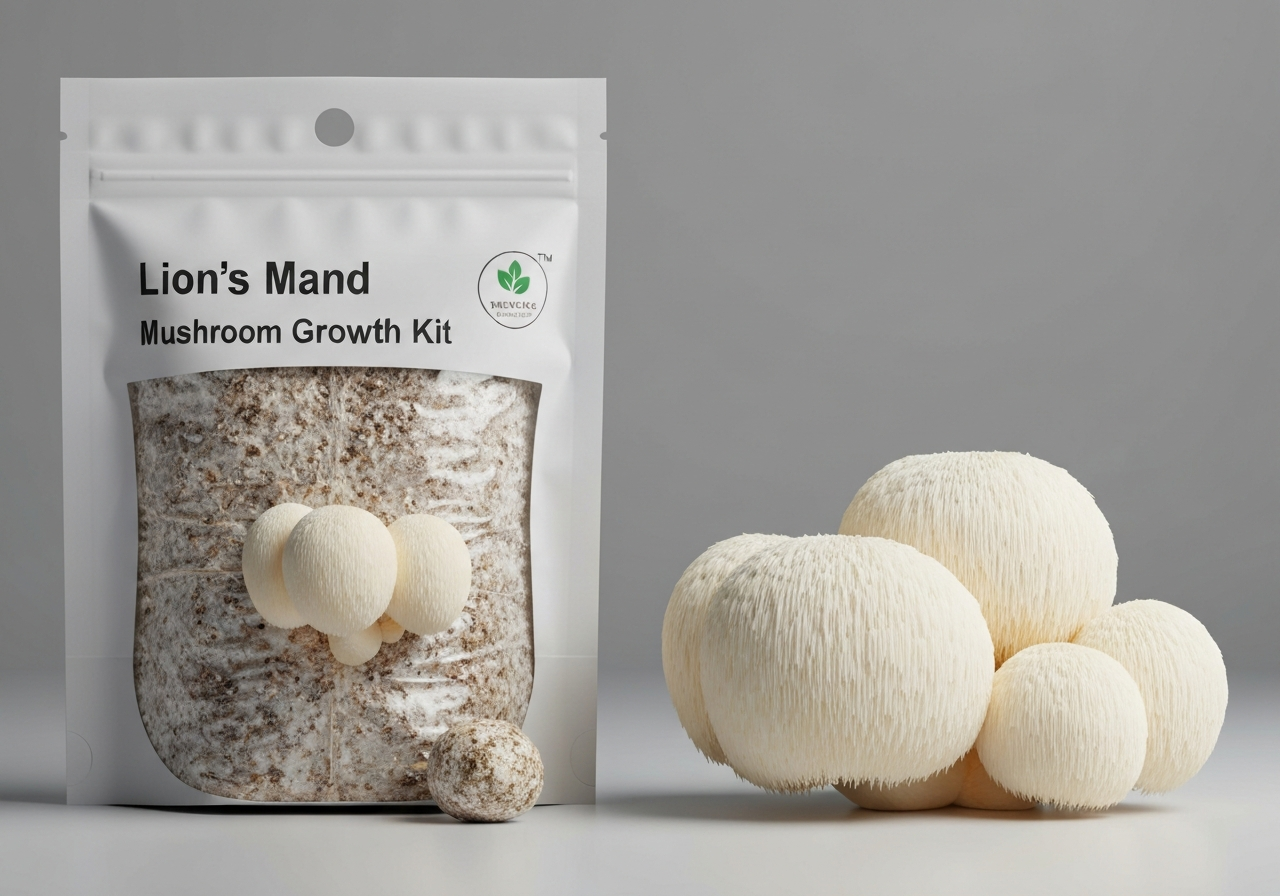
What's in the Box
This is the most generously packaged kit we've tested. The outer box is sturdy with a magnetic closure. feels like unwrapping a gift rather than opening a farming supply. Inside: a 2.8kg hardwood substrate block, a large humidity tent with adjustable vents, a fine-mist spray bottle (better quality than most freebies), a detailed 12-page instruction booklet, and a small hygrometer for monitoring humidity.
The hygrometer is the standout inclusion. No other kit we've tested includes one, and it makes a genuine difference. Lion's mane is fussier about humidity than oyster mushrooms, and being able to see the actual percentage rather than guessing takes the anxiety out of the process.
The substrate block was immaculate. Fully colonised. not a bare patch anywhere. with a firm, springy texture when pressed. The mycelium was bright white and healthy-looking. When we opened the bag, the smell was mild and slightly sweet, like fresh sawdust after rain. No musty or sour notes at all.
The instruction booklet deserves special mention. It's properly written, with photographs of each growth stage so you know what to expect and when. There's a troubleshooting section at the back covering yellowing, stalling, and contamination. This is how instructions should be done. Every other kit manufacturer should take notes.
Setup & Growing Experience
Setup follows the now-familiar pattern: cut a slit in the bag, place the block in the humidity tent, and mist. But the instructions here are much more specific than most kits. They recommend a 7cm horizontal slit (not an X-cut like oyster kits), positioned in the upper third of the block. The reasoning, apparently, is that lion's mane produces a single large fruiting body rather than multiple clusters, so you want one clean opening.
We set the kit up in our spare bedroom, away from direct sunlight. Temperature was steady at 18-20°C. The instructions specify misting three times daily. morning, afternoon, and evening. and maintaining humidity above 85%. With the hygrometer, we could see that after misting, humidity inside the tent peaked at about 95% and dropped to around 75% within 4-5 hours. So three times daily was the bare minimum to keep it in range.
Days 1-5 were quiet. A small white bump appeared at the slit on day 3, but we'd been fooled by similar bumps on other kits that turned out to be nothing, so we tried not to get excited. By day 6, the bump had clearly grown. it was about the size of a marble, with the faintest hint of texture on the surface. This was the beginning of something special.
Day 8 was when it got genuinely fascinating. The bump had expanded to the size of a golf ball and developed visible "teeth". the cascading white tendrils that give lion's mane its distinctive appearance. From this point, growth was dramatic. Each morning we'd check and see noticeable development. The tendrils lengthened, new ones formed, and the whole structure expanded outward and downward like a frozen waterfall.
By day 11, the fruiting body was the size of a large fist. The tendrils were 2-3cm long, bright white, and gently swaying when we opened the tent to mist. It genuinely looked like something you'd see on a David Attenborough programme. We caught ourselves just staring at it more than once. Our partner, who had been sceptical about "another kitchen experiment," was genuinely fascinated.
One critical observation: on day 9, we got busy and missed the afternoon misting session. By evening, the tips of the tendrils had turned slightly yellow. We misted immediately and by the next morning they'd recovered, but it was a clear warning. This mushroom does not tolerate dry air. If you're out of the house for 10+ hours regularly, you might want to invest in a small ultrasonic humidifier instead of relying on manual misting.
Results
We harvested on day 14, when the tendrils were about 3-4cm long and the overall fruiting body had stopped growing outward. The instructions say to harvest before the tips start to turn yellow or brown, which is good advice.
- First flush (day 14): One magnificent fruiting body weighing 150g. Pure white, firm, and fragrant.
- Second flush (day 30): 110g. Slightly smaller but still beautiful. Re-soaked the block for 8 hours between flushes.
- Third flush (day 48): 65g. Noticeably smaller and the tendrils were shorter, but still perfectly good.
- Total yield: 325g across three flushes.
At £34.99 for 325g, that's about £10.77 per 100g. Fresh lion's mane is genuinely difficult to buy in the UK. when you can find it, it's usually £4-6 per 100g from specialist suppliers. So the economics are actually reasonable, especially when you factor in the growing experience itself.
But the real story is the flavour. We sliced the first harvest into 1cm steaks and pan-fried them in butter for about 4 minutes per side until golden. The exterior developed a light crust while the interior stayed tender and juicy. The taste was extraordinary. genuinely reminiscent of crab or lobster meat, with a subtle sweetness and a texture that shredded apart in fibrous strands, exactly like shellfish. We are not exaggerating when we say this was one of the best things we've cooked all year.
We also tried shredding some of the second flush and making "crab" cakes. Mixed with a little mayo, breadcrumbs, spring onion, and Old Bay seasoning, then pan-fried. They were absurdly good. If someone had served them to us without explanation, we'd have assumed they contained actual crab.
Who It's For
This kit is for anyone who's moved past the "can I even grow mushrooms?" phase and wants something that feels genuinely rewarding. It demands more attention than a basic oyster kit. you can't just mist it once in the morning and forget about it. But the payoff is enormous, both visually and culinarily.
It's also a fantastic choice for anyone interested in the health aspects of mushrooms. Lion's mane has been the subject of significant research into cognitive function and nerve health. We're not making medical claims. just noting that growing your own gives you access to a species that's almost impossible to find fresh in most UK shops.
Less suited for complete beginners who've never grown anything before. Start with the Budget Shiitake Starter Kit or the Pink Oyster Family Kit to build confidence, then graduate to this one.
And if you're buying a gift, be honest about the recipient. Someone who'll commit to misting three times daily for two weeks will love this kit. Someone who forgets to water their houseplants will end up with a yellow, dried-out block and a bad experience.
Verdict
We've tested 47 kits across a dozen species, and this is the one we keep coming back to. The substrate quality is excellent, the included accessories (especially the hygrometer) show real thought, and the instructions are the best we've seen in the industry. But above all, the mushrooms themselves are extraordinary. visually captivating during growth and genuinely restaurant-quality when cooked.
The price will put some people off, and the humidity demands mean it's not the most forgiving kit for beginners. These are valid criticisms. But when the alternative is spending £5-6 per 100g for lion's mane from a specialist supplier (if you can even find it), and you get three flushes plus the entire growing experience, £34.99 starts looking very reasonable.
Our highest score to date: 9.1 out of 10. Thoroughly earned.
Related Reviews
- Premium Oyster Growing Kit Review. easier to grow, reliable yields
- Reishi Medicinal Grow Kit Review. another specialist species worth trying