
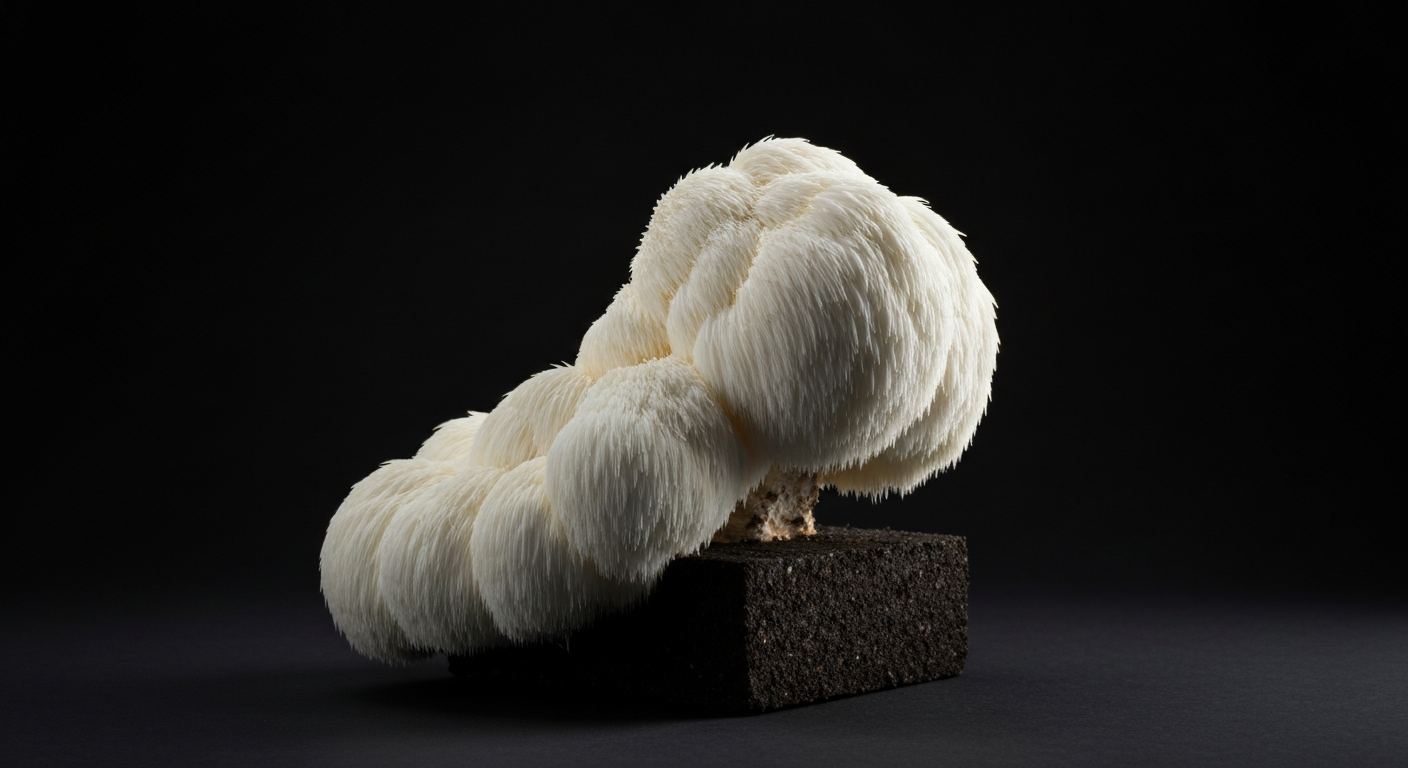
Lion's mane (Hericium erinaceus) is one of the most visually spectacular mushrooms you can grow at home. Instead of caps and stems, it produces a single globular fruiting body covered in long, cascading spines that look like a white waterfall. or, as the name suggests, a lion's mane. It is also one of the most prized gourmet mushrooms in the world, with a delicate flavour that people often compare to crab or lobster.
Why Grow Lion's Mane?
Three reasons make lion's mane worth the extra effort compared to easier species like oysters:
- Culinary excellence. Fresh lion's mane is almost impossible to find in UK supermarkets. When you do find it at specialist shops, expect to pay upwards of £30 per kilogram. Growing your own is the only realistic way to experience this mushroom at its best.
- Potential health benefits. Lion's mane has attracted significant research interest for its potential nootropic and neuroprotective properties. Studies suggest compounds in lion's mane (hericenones and erinacines) may stimulate nerve growth factor synthesis. We want to be clear: this is not a medicine and we are not making health claims. But the research is genuinely interesting.
- Sheer spectacle. There is nothing else quite like watching a lion's mane develop. The spines elongate day by day, creating a living sculpture on your shelf. It is the most photogenic mushroom we have ever grown.
Growing Conditions
| Factor | Requirement |
|---|---|
| Temperature | 16–21°C (ideal: 18–20°C) |
| Humidity | 85–95% (critical) |
| Light | Indirect daylight |
| Time to First Harvest | 14–21 days |
| Expected Flushes | 2–3 |
| Difficulty | Intermediate |
The Humidity Challenge
Let us be blunt: humidity is the single biggest factor in whether your lion's mane grow succeeds or fails. This species needs 85–95% relative humidity to produce those beautiful long spines. In a typical UK home, ambient humidity sits around 40–60%. nowhere near enough.
Practical solutions that actually work:
- Plastic bag humidity tent. Drape a large clear plastic bag loosely over the kit with 4–6 small holes punched in for air exchange. This is free and surprisingly effective.
- Mist frequently. Three to four times per day minimum. Set phone alarms if you are forgetful.
- Pebble tray. Place the kit on a tray of wet pebbles. As the water evaporates it raises local humidity.
- Bathroom growing. If you have a warm, well-lit bathroom, the naturally higher humidity can help. Just make sure there is adequate ventilation.
Without sufficient humidity, lion's mane produces short, stubby spines and the mushroom may yellow and abort. If you see yellowing, it is almost always a humidity problem.
Culinary Uses
Fresh lion's mane has a delicate, slightly sweet flavour with a texture that shreds into long, tender strands. which is why people compare it to crab meat. Our favourite preparations:
- Pan-fried in butter. Tear into thick slabs, sear in a hot pan with butter until golden. Season with salt and a squeeze of lemon. Outstanding.
- "Crab" cakes. Shred the mushroom, mix with breadcrumbs, egg, and Old Bay seasoning, form into patties and fry. Genuinely convincing.
- In pasta. Torn into pieces and tossed with tagliatelle, cream, and black pepper.
- Soup. Adds a velvety richness to any cream-based soup.
Our Lion's Mane Kit Review
Lion's Mane Complete Kit. 9.1/10
Price: £34.99 · Flushes: 2–3 · Yield: ~360g total
The highest-scoring kit we have ever tested. Stunning fruiting bodies, restaurant-quality mushrooms, and a genuinely rewarding growing experience. Requires consistent humidity attention but the results are spectacular.
Related Guides
- Best Lion's Mane Grow Kits. Our specialist guide (more kits being tested)
- Best Indoor Kits. How lion's mane compares for indoor growing
- Best Kits for Beginners. If lion's mane sounds too advanced, start here
- Oyster Mushrooms. An easier species to try first