
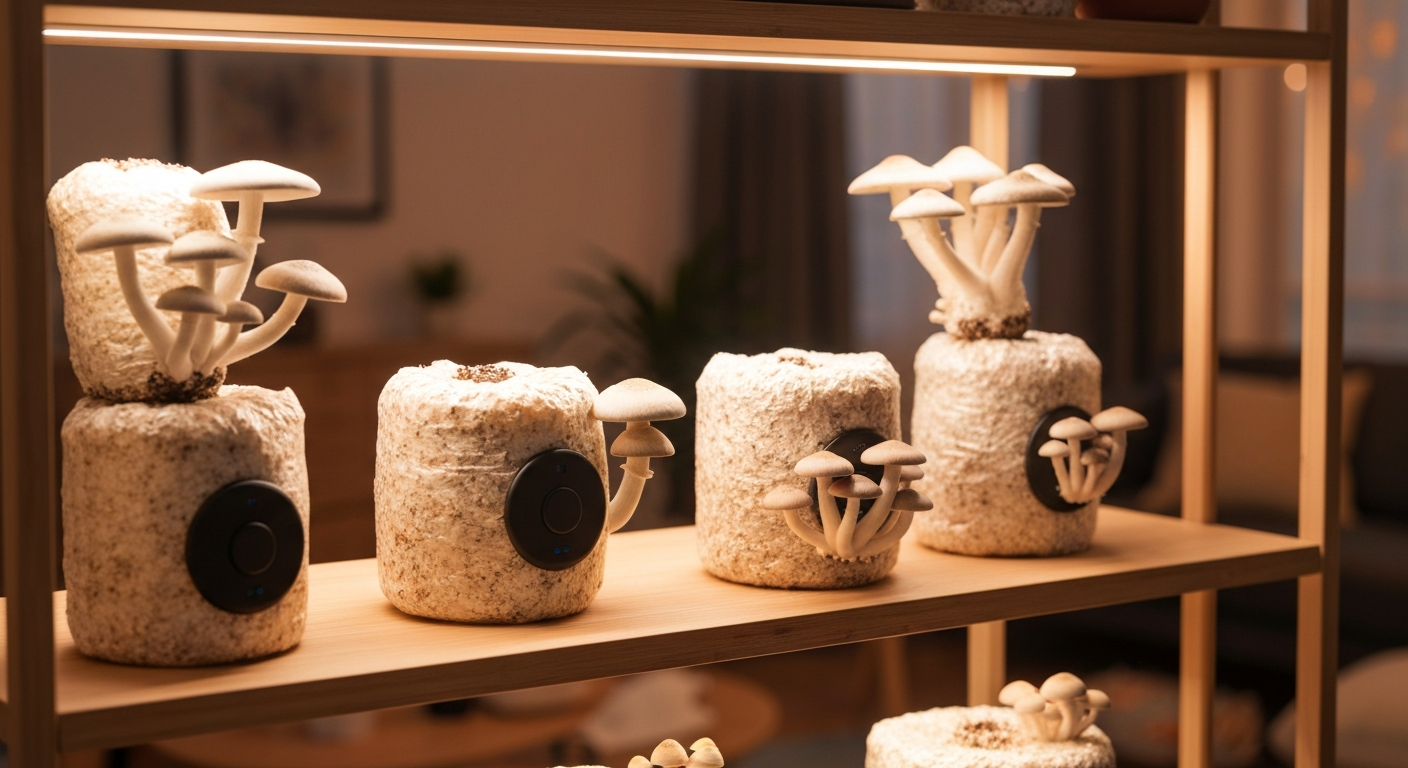
Good news: you do not need a garden, a greenhouse, or a lab to grow mushrooms. Every kit we test is grown in a normal spare room in a normal terrace house in the North West of England. No special equipment, no grow tents, no fans. just a shelf, a spray bottle, and a window for indirect light.
That said, some kits suit indoor life better than others. Temperature requirements, humidity needs, smell, and physical footprint all matter when you are growing fungi in your kitchen or bedroom. We have ranked every kit we have tested by how well it works as an indoor project.
Indoor Suitability Ranking
| Feature | Pink Oyster Family Kit | Premium Oyster Growing Kit | Budget Shiitake Starter Kit |
|---|---|---|---|
| Indoor Score | 10/10 | 9/10 | 9/10 |
| Space Needed | Worktop (30×20cm) | Worktop (30×25cm) | Plate (20×15cm) |
| Temperature | 20–30°C | 10–24°C | 12–21°C |
| Smell | Mild, pleasant | Mild, earthy | Moderate, earthy |
| Light | Indirect daylight | Indirect daylight | Indirect daylight |
| Price | £22.99 | £29.99 | £14.99 |
#1: Pink Oyster Family Kit. Indoor Score: 10/10
Price: £22.99 · Space: Worktop (30×20cm) · Temp: 20–30°C · Smell: Mild, pleasant
#2: Premium Oyster Growing Kit. Indoor Score: 9/10
Price: £29.99 · Space: Worktop (30×25cm) · Temp: 10–24°C · Smell: Mild, earthy
#3: Budget Shiitake Starter Kit. Indoor Score: 9/10
Price: £14.99 · Space: Plate (20×15cm) · Temp: 12–21°C · Smell: Moderate, earthy
#4: Lion's Mane Complete Kit. Indoor Score: 7/10
Price: £34.99 · Space: Shelf (25×20cm) · Temp: 16–21°C · Smell: Very mild
#5: King Oyster Indoor Kit. Indoor Score: 7/10
Price: £24.99 · Space: Shelf (25×20cm) · Temp: 12–18°C · Smell: Mild, pleasant
#6: Reishi Medicinal Grow Kit. Indoor Score: 6/10
Price: £27.99 · Space: Shelf (25×20cm) · Temp: 20–25°C · Smell: Moderate, woody
Space Requirements
The good news is that none of these kits need much room. The smallest (Budget Shiitake) fits on a side plate. The largest need about the space of an A4 sheet of paper. You do want to leave a bit of clearance around each kit for air circulation. mushrooms need fresh air exchange to develop properly, and sticking a kit in a sealed cupboard will produce leggy, deformed fruiting bodies.
Best spots in a typical house:
- Kitchen worktop. Convenient for misting, good ambient light, but beware of heat from ovens and hobs.
- Spare room shelf. Our preferred spot. Consistent temperature, easy to maintain humidity, out of the way.
- Bathroom shelf. Higher ambient humidity is a bonus, but ventilation can be poor.
- Bedroom windowsill. Works well for species that like indirect light, though temperature swings near windows can be an issue in winter.
Light: Less Than You Think
Mushrooms are not plants. They do not photosynthesise and they do not need sunlight to grow. What they do need is a small amount of indirect light to orient their growth. without any light cue, fruiting bodies tend to grow in random directions rather than forming neat clusters.
A north-facing window provides more than enough light. A desk lamp on for a few hours a day works too. Direct sunlight, on the other hand, will dry out your kit and stress the mycelium. Keep kits out of direct sun.
Temperature: The Hidden Challenge
This is where indoor growing gets interesting. Different species have very different temperature preferences:
- Pink oyster. Needs warmth (20–30°C). Perfect for summer or homes with the heating on. Will stall in cold rooms.
- Pearl oyster and shiitake. Very flexible (10–24°C and 12–21°C respectively). Work year-round in most UK homes.
- King oyster. Prefers cool (12–18°C). Best in autumn/winter or a cool spare room. Struggles in heated rooms.
- Lion's mane. Moderate (16–21°C). Needs consistent temperature without big swings.
- Reishi. Warm (20–25°C). Tolerates indoor conditions well but the very slow growth (8–12 weeks) tests patience.
The Smell Question
People always ask whether grow kits smell. The honest answer: slightly, but it is rarely unpleasant. Most kits produce a mild earthy, mushroomy scent that you will only notice if you put your nose close. Shiitake blocks can be a bit more pungent, especially when you first soak them in water to trigger fruiting. think damp forest floor. It dissipates within a day.
The one scenario where smell becomes a factor is contamination. If a kit develops green or black mould (which is rare with quality kits), it can produce a sour, unpleasant odour. If that happens, the kit should be discarded immediately. None of our recommended kits have ever had a contamination issue in our testing.
How We Scored Indoor Suitability
- Temperature flexibility. Kits that fruit across a wide range of normal household temperatures score highest.
- Physical footprint. Smaller kits that fit on a worktop or shelf score higher than those needing dedicated space.
- Humidity requirements. Kits that do well with basic misting score higher than those needing humidity tents or enclosures.
- Smell. We asked three household members to rate each kit's smell on a 1–5 nuisance scale.
- Mess factor. Some kits shed substrate or drop spores. We noted how much cleaning was needed.
Related Guides
If you are new to growing, start with our beginner's guide. For specific species, check out our oyster, shiitake, lion's mane, and reishi hub pages. And if budget is a priority, our under £25 guide highlights the most affordable options.