
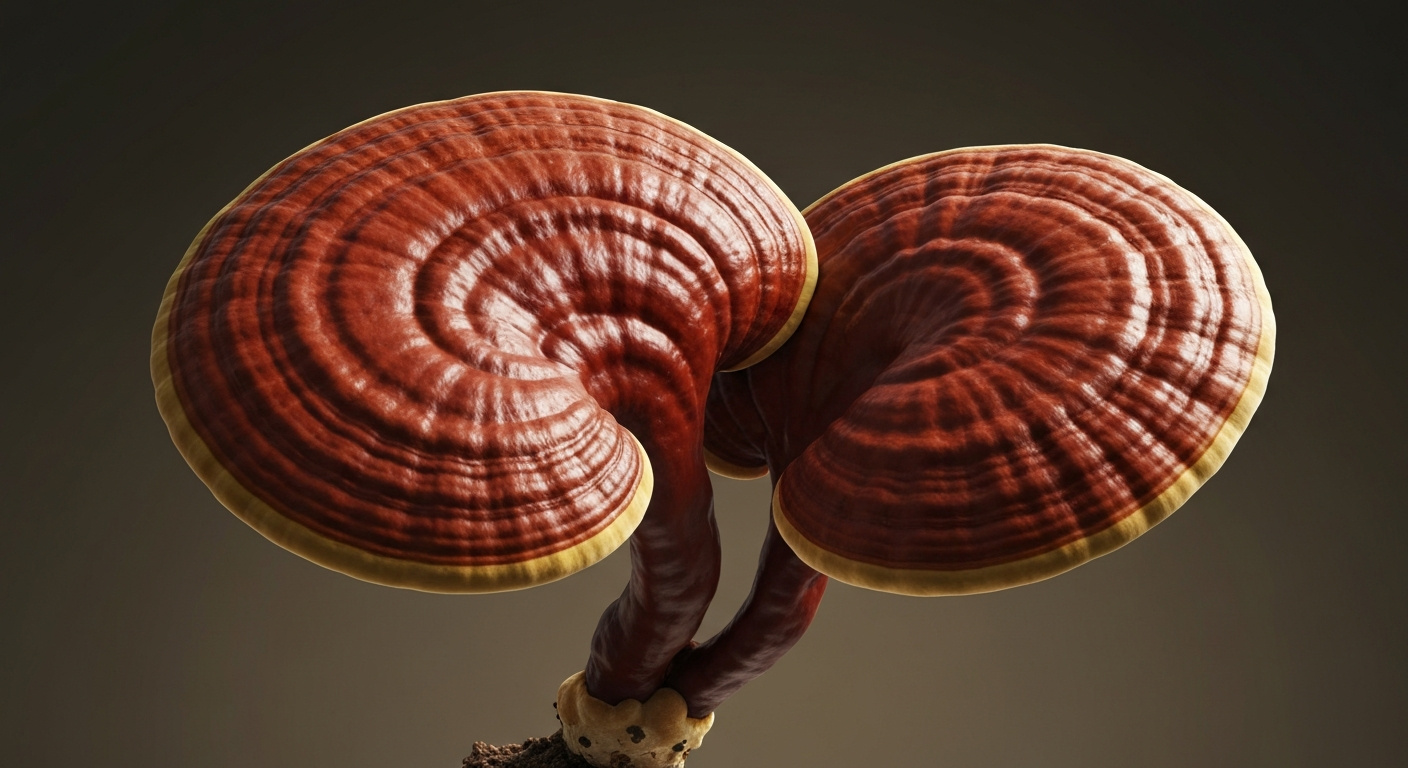
Reishi (Ganoderma lucidum) is not a mushroom you grow for dinner. It tastes like bitter tree bark and has the texture of shoe leather. But it is one of the most fascinating mushrooms you can grow at home. valued for centuries in traditional Chinese and Japanese medicine, and producing some of the most beautiful formations you will ever see from a grow kit.
What Makes Reishi Special
Reishi holds a unique position in the mushroom world. Known as lingzhi in Chinese medicine, it has been used for over 2,000 years as a tonic for longevity and general health. Modern research has identified several bioactive compounds in reishi, including:
- Ganoderic acids. Triterpenoid compounds that give reishi its bitter flavour and are the focus of much research into anti-inflammatory and immune-modulating properties.
- Beta-glucans. Polysaccharides found in many medicinal mushrooms, studied for their potential immune-supporting effects.
- Adenosine. A compound that may contribute to the calming effects traditionally attributed to reishi tea.
We want to be clear: we are not doctors and reishi is not a medicine. But the research is genuine and ongoing, and growing your own reishi is the most affordable way to experiment with making tinctures, teas, and extracts if that interests you.
Growing Expectations
Reishi grows differently from any other kit species. Rather than producing recognisable mushroom caps quickly, reishi typically goes through two distinct phases:
- Antler phase (weeks 2–6). The first thing you will see are finger-like protrusions emerging from the substrate bag. These "antlers" are pale cream to reddish-brown and grow upward, sometimes branching. Many growers prefer to harvest at this stage because the antler formations are beautiful and make excellent display pieces when dried.
- Conk phase (weeks 6–12). If given enough fresh air exchange and light, the antlers will flatten out into classic kidney-shaped conks (shelf-like brackets) with a deep reddish-brown lacquered surface. This is the traditional medicinal form of reishi.
Be prepared: reishi is slow. Where oyster mushrooms give you results in a week, reishi takes two to three months from start to harvest. This is not a kit for the impatient.
Growing Conditions
| Factor | Requirement |
|---|---|
| Temperature | 20–25°C (ideal: 22–24°C) |
| Humidity | 80–95% |
| Light | Low to indirect (affects form) |
| Time to Harvest | 8–12 weeks |
| Expected Flushes | 1–2 |
| Difficulty | Advanced |
Using Your Reishi Harvest
Since you are not going to be eating reishi in a stir-fry, here is what you can actually do with your harvest:
- Tea. Slice the dried reishi thinly and simmer in water for 30–60 minutes. The resulting tea is bitter and earthy. Many people add honey and ginger to make it palatable. It is an acquired taste, to put it politely.
- Dual extraction tincture. The traditional method for extracting both water-soluble and alcohol-soluble compounds. Simmer chopped reishi in water, then soak in high-proof alcohol (like vodka) for several weeks. Combine the two extracts. This requires some research and care.
- Dried display pieces. Reishi antlers and conks are genuinely beautiful when dried. The lacquered surface of a mature conk has a deep, jewel-like quality. Many growers dry them and display them as natural art pieces.
- Powdered supplement. Dried reishi can be ground to a fine powder and added to smoothies, coffee, or capsules. Again, we are not making health claims, but this is the form many people prefer for convenience.
Our Reishi Kit Review
Reishi Medicinal Grow Kit. 8.0/10
Price: £27.99 · Flushes: 1–2 · Time: 8–12 weeks
Beautiful antler formations, well-colonised substrate, and a genuinely fascinating growing experience for patient growers. Not a culinary mushroom, but if you are interested in medicinal fungi or just want to grow something truly unusual, this is a solid kit.
Is Reishi Right for You?
Honestly, reishi is not for everyone. If you are looking for a quick, rewarding grow that ends with a tasty dinner, look at oyster mushrooms or shiitake instead. But if you are drawn to the stranger side of mycology, enjoy slow projects, or are genuinely interested in medicinal mushrooms, reishi is a fascinating species to grow.
Related Guides
- Best Indoor Kits. How reishi compares for indoor growing
- Best Kits for Beginners. Easier species to start with if reishi sounds too advanced
- Lion's Mane. Another fascinating species, easier than reishi and edible
- All Reviews. Browse all our tested kits