
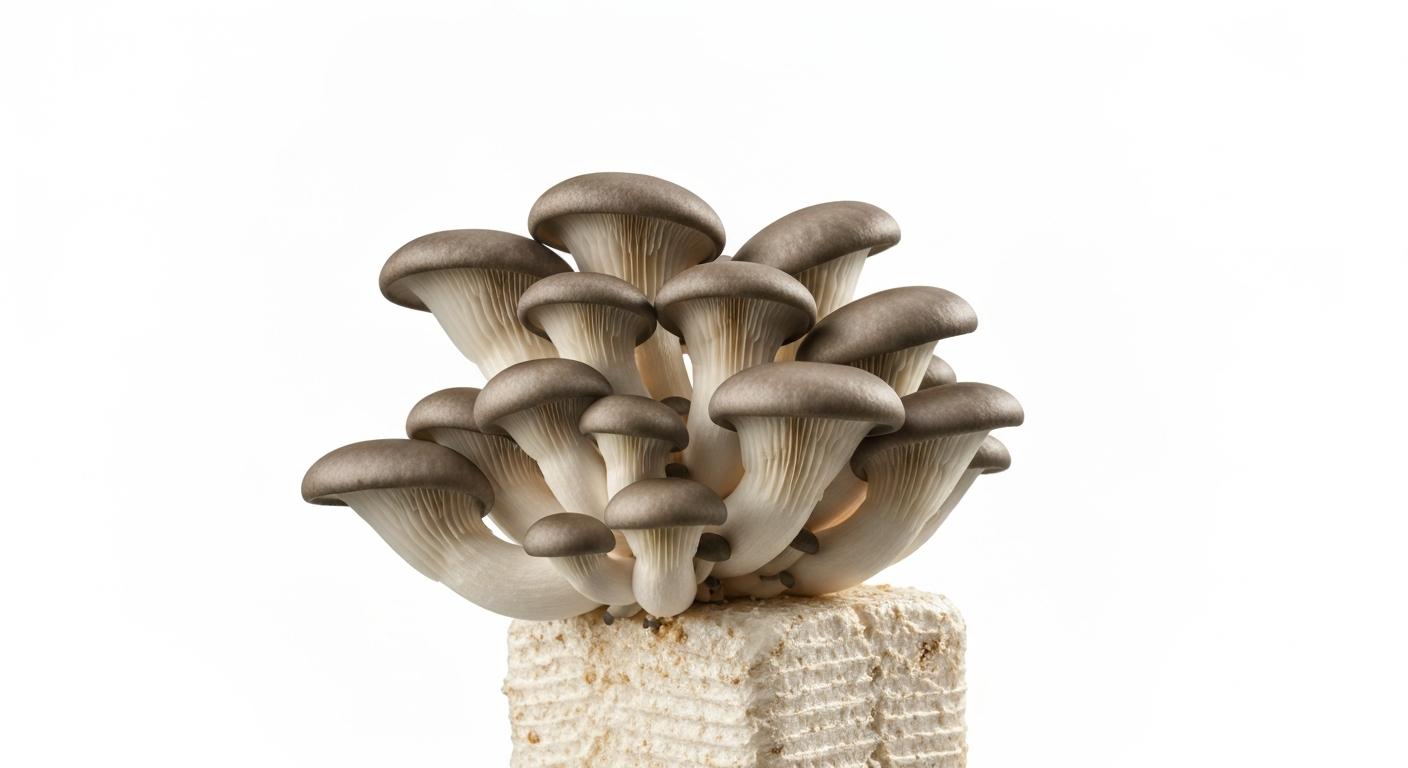
Oyster mushrooms are the most popular grow kit species in the world, and for good reason. They are fast, forgiving, and come in enough varieties to keep even experienced growers interested. Whether you are a complete beginner or you have been growing for years, there is an oyster variety that suits you.
Oyster Varieties at a Glance
The term "oyster mushroom" covers several distinct species within the Pleurotus genus. Each has its own character, growing requirements, and culinary strengths:
Pearl Oyster (Pleurotus ostreatus)
The classic oyster mushroom. the one you see in supermarkets. Pearl oysters grow in large, shelf-like clusters with grey to cream-coloured caps. They have a mild, savoury flavour with subtle anise notes. Pearl oysters are the most temperature-tolerant species in the family, fruiting happily between 10–24°C. This makes them an excellent year-round choice for UK growers. They are also the most forgiving of beginner mistakes. irregular misting, slightly wrong temperature, or too much light will not kill a pearl oyster kit.
Pink Oyster (Pleurotus djamor)
The showstopper. Pink oysters are a tropical species that produces vivid flamingo-pink clusters in as little as four to five days from pinning. The colour fades to a peachy-salmon when cooked, and the flavour is mild, slightly sweet, and pairs well with Asian-inspired dishes. The catch is that pink oysters need warmth. 20°C minimum, ideally 24–28°C. In a UK winter, you will need a warm room or heated propagator. They also have a very short shelf life once harvested. Eat them the day you pick them for the best flavour.
King Oyster (Pleurotus eryngii)
The gourmet choice. Unlike other oysters, king oysters produce individual mushrooms rather than clusters. thick, meaty stems with small, flat caps. They look nothing like standard oysters and they cook differently too. Slice the stems into thick rounds and sear them in a hot pan with butter. the texture is dense, almost scallop-like. King oysters prefer cooler conditions (12–18°C) and take longer to fruit (14–21 days), making them better suited to autumn and winter growing. Not the easiest species for beginners, but the culinary result is outstanding.
Blue Oyster (Pleurotus columbinus)
A cold-weather cousin of the pearl oyster. Blue oysters produce clusters with distinctive blue-grey caps that darken in cooler conditions. They fruit best between 10–18°C, making them ideal for unheated rooms, garages, or outdoor growing in spring and autumn. The flavour is similar to pearl oyster but with a slightly firmer texture. We have not yet tested a dedicated blue oyster kit (we grew our batch from grain spawn), but we are expecting one to arrive for review shortly.
Growing Conditions
| Variety | Temperature | Humidity | Time to Harvest | Difficulty |
|---|---|---|---|---|
| Pearl Oyster | 10–24°C | 80–90% | 10–14 days | Beginner |
| Pink Oyster | 20–30°C | 85–95% | 7–10 days | Beginner |
| King Oyster | 12–18°C | 85–90% | 14–21 days | Intermediate |
| Blue Oyster | 10–18°C | 85–95% | 10–14 days | Beginner |
Our Oyster Kit Reviews
We have tested three oyster kits so far. Here is how they scored:
Related Guides
- Best Oyster Mushroom Kits 2026. Our top three picks ranked and compared
- Oyster Kit Showdown. Five kits tested head-to-head under identical conditions
- Best Kits for Beginners. Includes two oyster kits in the top three
- Best Indoor Kits. All kits ranked by indoor suitability