
What's in the Box
The kit arrives in a compact but weighty box. Inside: a dense 2.2kg supplemented hardwood substrate block, a humidity tent, and a two-page instruction card. No spray bottle, which is par for the course at this price point. The substrate block felt noticeably heavier and denser than the pearl oyster equivalent. king oysters grow on a more nutrient-rich mix.
Colonisation was complete and even. The mycelium had a slightly different appearance to pearl oyster blocks. thicker, more rope-like strands with a faintly yellowish tinge at the base. The smell was clean but stronger than other kits we've opened, with a pronounced earthy, almost mushroomy aroma straight out of the bag. If you've ever bought dried porcini, it was reminiscent of that.
The instruction card was adequate but not outstanding. It correctly emphasises the temperature requirements (14-18°C for fruiting) but doesn't offer much practical advice on how to achieve this in a normal house. In the middle of a British winter, most rooms with the heating on will be 19-22°C. You need to think about placement.
Setup & Growing Experience
We ran this kit twice: once in January (our main test) and once in July (to see how it handled warmth). The difference was dramatic enough that we need to discuss both.
Winter test (January): We placed the kit in our unheated spare bedroom, which sits around 14-16°C in winter. Cut the standard X-slit in the bag, draped the humidity tent over, and misted twice daily. The lower temperature meant slower evaporation, so twice daily was sufficient.
Nothing happened for nearly two weeks. King oysters are the tortoises of the mushroom world. Where pink oysters show pins in 4 days and pearl oysters by day 5-6, the king oyster block just sat there, white and inscrutable. We checked for contamination daily and found nothing wrong. it was simply taking its time.
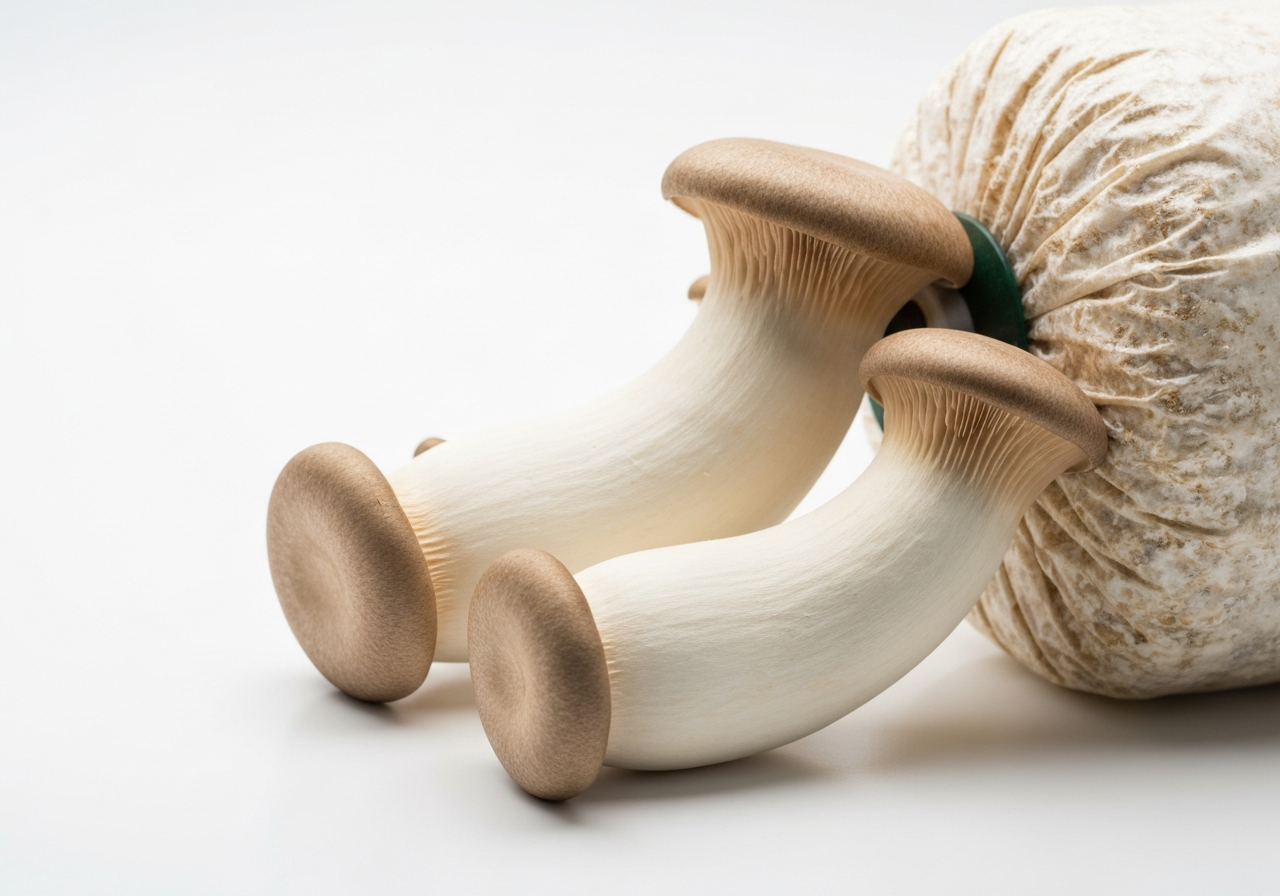
Day 13 brought the first pins: small, knobbly bumps emerging in a tight cluster from the slit. They were thicker and stubbier than pearl oyster pins from the start. By day 16, the stems had elongated to about 3cm and were noticeably chunkier. more like little cylinders than the flat, fanning shapes of other oysters.
The growth habit of king oysters is different from their cousins. Rather than spreading outward in a shelf-like cluster, they push straight up. The stems thicken dramatically while the caps stay relatively small. By day 19, we had a cluster of five mushrooms with stems as thick as a thumb and small, tan-coloured caps about 3-4cm across. They looked like cartoon mushrooms. the classic toadstool shape.
We harvested on day 21, when the caps had flattened out and the stems had stopped thickening. They came away from the block with a firm twist.
Summer test (July): Room temperature was 23-26°C. The block pinned erratically on day 18, producing several tiny, misshapen mushrooms with thin stems and large caps. the opposite of what you want from king oysters. We harvested a meagre 45g of frankly disappointing mushrooms. The heat had caused them to grow too quickly, prioritising cap expansion over stem thickness. They tasted fine but looked nothing like the winter harvest.
The lesson is clear: if you can't provide 14-18°C, don't buy this kit. You'll be disappointed.
Results
Winter test numbers (the ones that actually matter):
- First flush (day 21): 120g from one cluster of five mushrooms. The largest single mushroom weighed 35g. thick stem, small cap, dense as anything.
- Second flush (day 40): 95g. Four mushrooms, slightly thinner stems but still excellent.
- Third flush (day 58): 55g. Two mushrooms. Respectable for a third flush.
- Total yield (winter): 270g across three flushes.
- Total yield (summer): 45g. One flush. Barely worth the effort.
At £24.99 for 270g (winter), that's £9.26 per 100g. Fresh king oysters retail for around £3-4 per 100g at Asian supermarkets, or £5-7 from specialist suppliers. So it's not cheaper than buying them. but fresh king oysters of this quality, harvested within the hour? The texture difference is enormous.
We sliced the stems into 2cm rounds and seared them in a smoking-hot pan with a knob of butter. The exterior caramelised beautifully, developing a golden crust, while the interior stayed tender and juicy. The texture was. and we don't say this lightly. genuinely comparable to seared scallops. Firm, slightly bouncy, with a mild sweetness and an umami depth that had us scraping the pan.
We also tried them thinly sliced in a ramen bowl. Excellent. And torn into strips and grilled with a brush of miso glaze. outstanding. King oysters are the most versatile cooking mushroom we've tested, and the home-grown quality makes them even better.
Who It's For
This kit is for patient growers with a cool room. That's the honest truth. If you've got an unheated spare bedroom, a cool garage, or a north-facing utility room that stays around 14-18°C, you're in business. If your entire house runs at 20°C+, give this one a miss until the weather turns.
It's also a great choice for anyone who cooks a lot of Asian food. King oysters are a staple in Chinese, Japanese, and Korean cooking, and having fresh ones to hand transforms dishes. The scallop-like texture when seared makes them a favourite with vegetarians and vegans looking for meaty substitutes.
Not recommended for impatient growers or families wanting a quick visual payoff. The Pink Oyster Family Kit delivers excitement within days. The Premium Oyster Growing Kit is more forgiving on temperature. This kit rewards patience and the right conditions with something exceptional. but it does demand both.
Verdict
We're scoring this based on the winter test, because that's what the kit is designed for. Under proper conditions. 14-18°C, consistent humidity, and a good three weeks of patience. it produces thick, meaty king oyster mushrooms that are genuinely some of the best we've eaten. The seared-scallop comparison isn't marketing fluff; it's what they actually taste like.
But we can't ignore the summer test results. A kit that only works for six months of the year has a real limitation, and the instructions should be more upfront about this. A prominent "GROWS BEST OCTOBER TO MARCH" sticker on the box would save a lot of disappointment.
If you can provide the right conditions, this is excellent. If you can't, your money is better spent elsewhere. 7.8 out of 10.
Related Reviews
- Premium Oyster Growing Kit Review. more forgiving, similar quality
- Lion's Mane Complete Kit Review. another specialist species, higher score
Browse all oyster mushroom kits | Best Indoor Mushroom Growing Kits